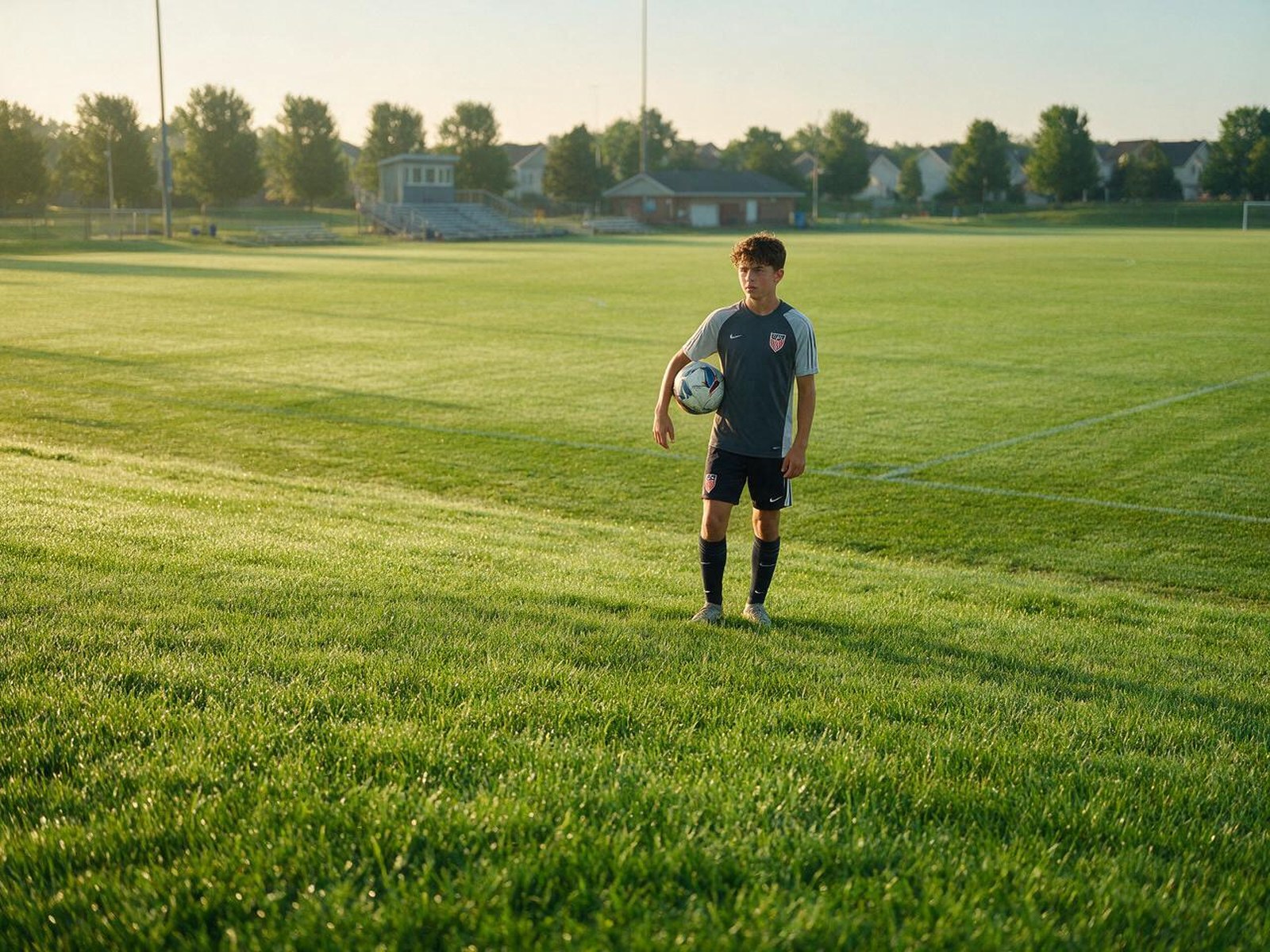
You cannot out-train poor fuel, too little sleep or a body that is overloaded during a growth spurt. Here is safe, practical guidance for young soccer players, drawn from US pediatric and sports medicine sources, and the myths to ignore.
Fuel, don't diet
Growing players need enough food, not less of it. The American Academy of Pediatrics (AAP) advises a meal of mostly carbohydrates with moderate protein, low in fiber and fat, about three to four hours before exercise, then refueling with carbohydrates and protein within 30 to 60 minutes afterward. Skip the supplement aisle: the AAP says studies have not shown that creatine or protein supplements improve performance in younger athletes, and most young players who eat a balanced diet do not need protein supplements.
Hydration: water first
For activity under an hour, water is enough. For sessions longer than one to two hours, or in very hot weather, a sports drink can help replace carbohydrates and electrolytes. Aim for small, regular sips, around 3 to 4 ounces every 15 minutes. Energy drinks are a different product, with caffeine and extra sugar, and the AAP does not recommend them.
Sleep is part of training
The American Academy of Sleep Medicine recommends 8 to 10 hours of sleep a night for teens aged 13 to 18. In one study of middle and high school athletes, those who averaged under eight hours a night were 1.7 times more likely to have had an injury. That is a link, not proof, but it is one more reason to protect bedtime.
Growth spurts and training load
Girls usually hit their growth spurt around 11 and a half and boys about two years later, and growth plates are weakest during the fastest growth. This is when Osgood-Schlatter disease (pain and swelling just below the kneecap, where the tendon meets the shinbone) often appears, especially in running and jumping sports. It usually settles by about 14 in girls and 16 in boys, and staying active as tolerated does not cause long-term damage. To manage load, AAP sports medicine doctors suggest one to two rest days a week, at least two to three months off a year, and not training more hours a week than your age. The AAP also recommends avoiding specializing in one sport before puberty.
Strength work and injury prevention
Strength training is not off-limits for young players. The AAP says it is not harmful to growth plates when done in supervised settings, children can start around 7 or 8, and lifts should be learned without weight first, with one-rep maximum lifts left until the body is fully grown. A structured warm-up helps too: in a Norwegian trial of 1,892 female players aged 13 to 17, teams that used the 11+ warm-up had a lower risk of injuries overall and of severe injuries. Try the FIFA 11+ warm-up, a drill from Football Reach, our UK sister site.
The physical pillar is one of four, and it depends heavily on growth timing, which is why late developers deserve patience. Take the free development assessment to see which parts of your game to work on next.
This article is general information, not medical advice. Always talk to your doctor or a qualified professional about a specific injury or dietary concern.
Sources: AAP on sports nutrition; AAP on supplements; AASM teen sleep advisory; Milewski et al., 2014; OrthoInfo (AAOS); AAP on burnout; AAP on strength training; Soligard et al., BMJ, 2008.
Frequently asked questions
Should young soccer players drink sports drinks?
For activity under an hour, water is enough. The AAP says sports drinks can help in sessions longer than one to two hours or in very hot weather, and it does not recommend energy drinks.
How much sleep do teenage soccer players need?
The American Academy of Sleep Medicine recommends 8 to 10 hours a night for teens aged 13 to 18. In one study, athletes who averaged under eight hours were 1.7 times more likely to have had an injury.
Is strength training safe for young soccer players?
Yes, when it is supervised. The AAP says strength training is not harmful to growth plates in supervised settings, children can start around age 7 or 8, and one-rep maximum lifts should wait until the body is fully grown.
Curious where you actually stand? Soccer Reach turns your level, age and honest self-assessment into a free Player Development Score, with the parts of your game to work on next.
Get your free score